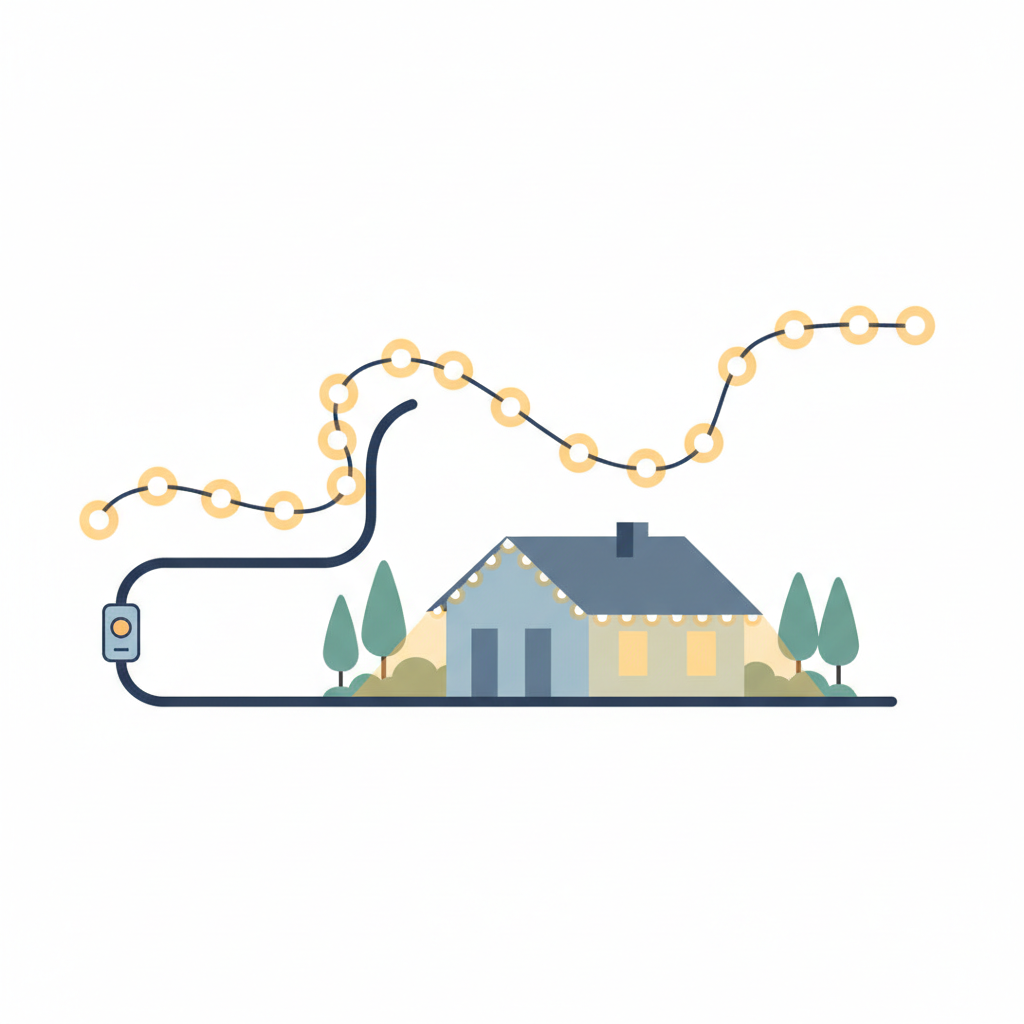
The desire for a beautifully illuminated home that shines year-round, without the annual hassle of stringing up temporary decorations, has led to the massive popularity of Permanent Outdoor Lights. These systems offer durable, discreet, and highly customizable lighting solutions that transform your property’s curb appeal.
If you own a larger home or a property with extensive rooflines, a standard 100ft kit simply won’t suffice. You need a comprehensive solution designed for scale. This guide is specifically tailored for those tackling a significant project—approximately 250 feet of coverage—and looking to install high-quality, long-lasting lighting. We will walk you through the planning, preparation, and installation process, ensuring you get the most out of your investment, especially when utilizing a robust package like the 250ft Permanent Outdoor Lights kit.
Why Choose Permanent Outdoor Lights Over Traditional Solutions?
While traditional holiday lighting serves its purpose for a few weeks a year, Permanent Outdoor Lights offer distinct advantages that justify the initial investment:
- Year-Round Utility: Use them for holidays, game days, ambient architectural lighting, or enhanced security lighting.
- Durability and Longevity: Designed to withstand harsh weather, including heavy rain, snow, and UV exposure. They typically last 20 to 50 times longer than standard temporary lights.
- Discreet Installation: The tracks and light channels are color-matched to your trim and tucked neatly under the eaves, making them virtually invisible during the day.
- Smart Customization: Modern systems are app-controlled, allowing you to change colors, patterns, brightness, and schedule lighting sequences instantly from your phone.
For large installations, choosing a specialized kit is crucial. Attempting to piece together multiple smaller kits often leads to inconsistent power draws and complicated wiring. The 250ft Permanent Outdoor Lights package provides all the necessary components, controllers, and wiring to handle the scale of a large residential installation seamlessly.
Measuring and Planning Your 250ft Installation
Before ordering your system, accurate measurement is non-negotiable. While the target is 250 feet, it’s essential to know exactly where the lights will go to ensure you have enough track and connectors.
Mapping Your Roofline
Use a measuring wheel or a long measuring tape to map out the exact paths you intend to light. Focus on the following areas:
- Eaves: Measure the length of all straight roof edges where the lights will be mounted.
- Gables and Peaks: Account for the angled sections. Remember that you will need specialized connectors or flexible tracks to navigate these corners smoothly.
- Obstructions: Note down the locations of downspouts, vents, and complex architectural features that might require cutting the track or using jumper wires.
When planning for a 250ft installation, consider the power injection points. High-quality Permanent Outdoor Lights systems require power to be injected at regular intervals (often every 50-75 feet) to prevent voltage drop, which can cause dimming or color inconsistency further down the line. A dedicated 250ft kit is engineered to manage these power requirements efficiently.
Essential Tools and Preparation Checklist
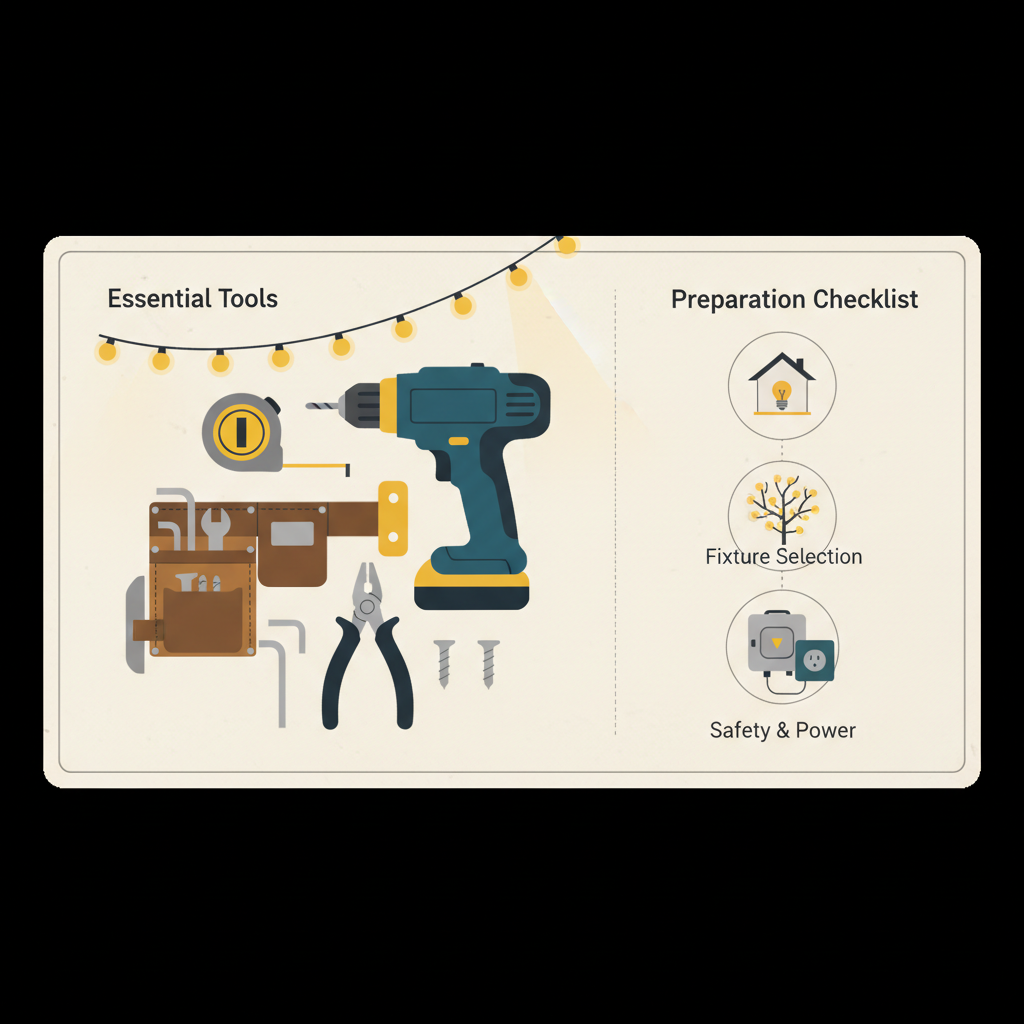
Safety and preparation are paramount for any installation involving heights and electrical components. Ensure you have the following tools ready before you start mounting the track:
Safety and Access
- Sturdy Extension Ladder (rated for your roof height)
- Safety Harness (highly recommended for high or steep roofs)
- Measuring Tape and Pencil
Installation Tools
- Cordless Drill/Driver (for mounting screws)
- Metal Snips or Hacksaw (for cutting the aluminum track)
- Wire Crimpers and Strippers (for connecting power leads and jumpers)
- Caulking Gun and Exterior Grade Sealant (to seal any drilled holes or exposed connections)
- Multimeter (optional, but useful for testing voltage)
Tip: If you are installing the 250ft Permanent Outdoor Lights system, verify that all included components—the controller, power supply, track segments, and light nodes—are present and undamaged before climbing the ladder.
Step-by-Step Installation Guide for Seamless Results
Installing Permanent Outdoor Lights is a manageable DIY project, provided you follow the steps methodically. The key is to work in small, manageable sections, starting from the power source.
Step 1: Locate and Mount the Controller
The main controller and power supply should be mounted in a protected location, such as inside a garage, under a covered porch, or in a weatherproof outdoor enclosure. Ensure the controller is close enough to the first section of lights to minimize exposed wiring.
Step 2: Cutting and Mounting the Track
The aluminum track is what holds the individual light nodes and conceals the wiring. Begin mounting the track directly under the eaves, ensuring it is level and flush against the fascia board. Use stainless steel screws provided in your kit. When you reach a corner or a peak, use your metal snips to cut the track at the appropriate angle (usually 45 degrees) for a clean, professional fit.
Step 3: Inserting the Light Nodes
Once the track is securely mounted along the entire 250ft path, you can begin inserting the individual light nodes. These nodes typically snap or slide into the channel. Ensure the orientation of the lights is consistent across the entire run—usually, there is an arrow or marking indicating the direction of the data signal.
Step 4: Connecting Power and Data
This is the most critical step for large installations. Connect the main power and data cable from the controller to the first light node. At predetermined intervals (as specified by the 250ft Permanent Outdoor Lights instructions), you must run jumper wires discreetly to inject power back into the line. This ensures consistent color and brightness across the full 250 feet.
Step 5: Testing and Sealing
Before finalizing the installation, plug in the system and perform a full test. Use the app to cycle through colors and patterns to confirm that all Permanent Outdoor Lights are functioning correctly and that there are no noticeable drops in brightness. Once confirmed, use exterior sealant to cover any exposed wire connections or entry points to protect them from moisture.
Maximizing Your Investment: Maintenance and Smart Features
One of the greatest benefits of high-quality Permanent Outdoor Lights is their minimal maintenance requirement. Once installed, they are designed to be forgotten.
Low Maintenance Requirements
The primary maintenance involves occasional cleaning of the light lenses if dust or debris builds up, though rain usually handles this. Since the wiring is protected within the track, rodent damage and weather exposure are significantly reduced compared to temporary lighting.
Harnessing Smart Technology
Modern systems are defined by their smart features. Ensure you download the corresponding mobile application and familiarize yourself with its capabilities. You should be able to:
- Set automated schedules for daily operation.
- Create custom color themes for holidays (e.g., red/green for Christmas, orange/purple for Halloween).
- Utilize dynamic effects like chasing, twinkling, or fading.
- Integrate with smart home systems (like Alexa or Google Home) for voice control.
Investing the time and effort into installing a comprehensive system like the 250ft Permanent Outdoor Lights will pay dividends for years to come, offering unparalleled flexibility and stunning curb appeal without the annual chore.
Learn how to install 250ft Permanent Outdoor Lights with this ultimate guide. We cover planning, tools, step-by-step installation, and maximizing your smart lighting investment.